
Could It Be Meningitis? The Symptoms to Look Out For
© logo3in1 adobe.stock
I’ve been watching the news of the outbreak of Meningitis in Kent with a heavy heart. I had Meningitis B and septicaemia in the early nineties and even though I was only 12 at the time, and even though it’s decades ago, I remember vividly how ill I felt. In fact, ill doesn’t even come close to describing the pain I felt in my head and the sickness and weakness. I am so very lucky I made it out with only a few after effects, because the disease is devastating.
Which is why it’s so important to recognise symptoms early and act quickly.
The UK Health Security Agency (UKHSA) have released the following information:
The UK Health Security Agency (UKHSA) is continuing to investigate an outbreak of meningococcal disease in Kent with 13 cases notified since 13 March. Sadly, this includes 2 people who are known to have died.
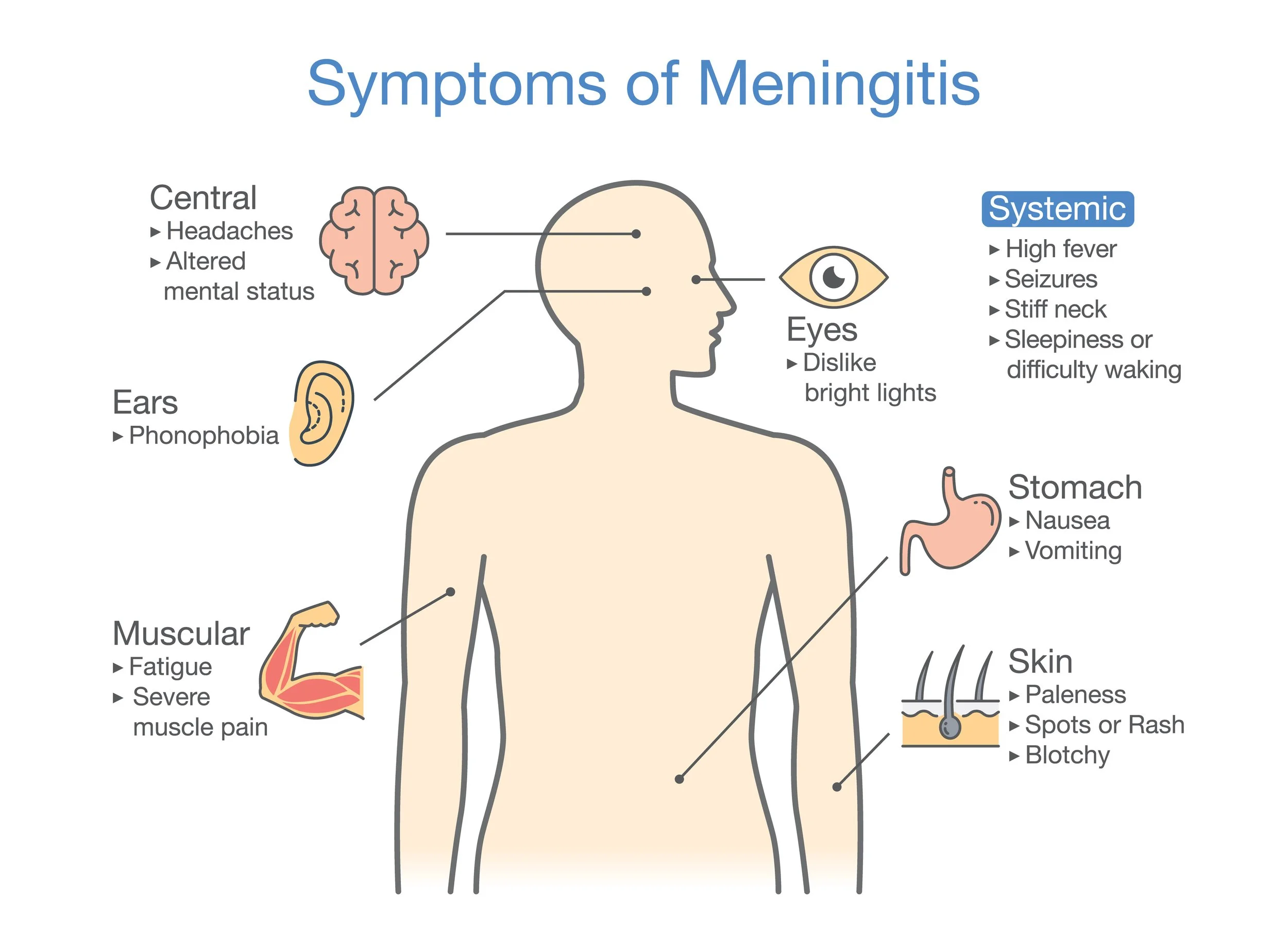
Meningococcal disease can progress rapidly. Signs and symptoms of meningococcal meningitis and septicaemia can include a fever, headache, rapid breathing, drowsiness, shivering, vomiting, and cold hands and feet. Septicaemia can also cause a characteristic rash that does not fade when pressed with a glass.
Early symptoms can often be confused with other illnesses such as a cold, flu or hangover, and students are particularly at risk of missing the early warning signs. If you or anyone you know develops any of these symptoms, seek medical help immediately by contacting a GP, calling NHS 111 or dialling 999 in an emergency. Knowing the signs and taking early treatment can be lifesaving.
Trish Mannes, UKHSA Regional Deputy Director for the South East, said:
Our thoughts remain with the friends and family involved and we understand that many people in the university and wider community will be affected by this sad news.
Our investigations have identified that some cases visited Club Chemistry in Canterbury and it is important that anyone who visited the club between 5 and 7 March now comes forward for preventative antibiotic treatment as a precaution, as well as those offered antibiotics at the university – these students are being contacted directly through the university.
If you think you may have symptoms of meningitis, do not hesitate to seek medical help by contacting your GP or calling NHS 111.
Meningococcal disease (meningitis and septicaemia) is an uncommon but serious disease caused by meningococcal bacteria. Very occasionally, the meningococcal bacteria can cause serious illness, (inflammation of the lining of the brain) and septicaemia (blood poisoning), which can rapidly lead to sepsis.
The onset of illness is often sudden and early diagnosis and treatment with antibiotics are vital.
Early symptoms, which may not always be present, include:
a rash that doesn’t fade when pressed with a glass
sudden onset of high fever
severe and worsening headache
stiff neck
vomiting and diarrhoea
joint and muscle pain
dislike of bright lights
very cold hands and feet
seizures
confusion/delirium
extreme sleepiness/difficulty waking
Young people going on to university or college for the first time are particularly at risk of meningitis because they newly mix with so many other students, some of whom are unknowingly carrying the bacteria at the back of their nose and throat.
Further information on meningococcal disease
The Meningitis Research Foundation
0808 800 3344 (24 hours)Meningitis Now
0808 80 10 388 (9am to 8pm)